When Do You Need Sewer Line Installation in North Dallas?
You may need sewer line installation in North Dallas when your existing sewer pipe is severely damaged, collapsed, repeatedly backing up, or beyond effective repair. Installation is also necessary when building a new property that requires a sewer connection. A professional sewer inspection can determine whether cleaning, targeted repairs, or complete sewer line replacement is the most appropriate solution.
At Mega Toilet Plumbing, we understand how stressful sewer line problems can be for North Dallas homeowners and property managers. Your sewer system plays an essential role in keeping wastewater moving safely away from your property, and problems can quickly disrupt your daily routine. Whether you’re dealing with recurring drain backups, deteriorating underground pipes, or planning a new construction project, choosing the right plumbing company makes a difference.
Our team focuses on dependable plumbing solutions, clear communication, and customer care throughout the process. We help property owners understand their options so they can make informed decisions about sewer installation and repairs. Knowing when a new sewer line is necessary can help you avoid unnecessary expenses, protect your property, and maintain a reliable plumbing system.
Signs You Need Professional Sewer Line Installation in North Dallas
Sewer line problems often develop gradually before becoming serious emergencies. Recognizing the warning signs can help you address underground plumbing issues before they cause extensive property damage.
1. What Are the Warning Signs of a Failing Sewer Line?
Persistent drainage problems throughout your property can indicate a damaged or deteriorating main sewer line.
Unlike an isolated clogged sink or toilet, sewer line problems frequently affect multiple plumbing fixtures simultaneously.
Common warning signs include:
- Frequent sewage backups in toilets, showers, or floor drains
- Multiple drains emptying slowly at the same time
- Gurgling noises coming from toilets or drainpipes
- Persistent sewage odors inside or outside your property
- Unexplained wet patches or unusually green areas of your lawn
- Recurring clogs that return shortly after professional drain cleaning
According to the U.S. Environmental Protection Agency (EPA), sewer overflows can result from tree root intrusion, damaged pipes, blockages, and inadequate maintenance.
These problems can create unsanitary conditions and expose properties to wastewater contamination.
If you notice several warning signs, schedule a professional sewer inspection. Early diagnosis can help determine whether sewer line repair is sufficient or a new installation is necessary.
2. When Is Sewer Line Replacement Better Than Repair?
Sewer line replacement becomes the better option when extensive structural damage makes localized repairs ineffective or impractical.
Minor cracks, isolated blockages, and small damaged sections can sometimes be corrected without replacing the entire pipe. However, widespread deterioration may require a more permanent solution.
Situations that may justify new sewer line installation include:
- Collapsed pipes: A collapsed sewer line cannot reliably transport wastewater and typically requires replacement of the affected section.
- Extensive corrosion: Severely deteriorated pipe walls can weaken the sewer system and increase the likelihood of failure.
- Repeated root intrusion: Tree roots entering through multiple damaged joints may indicate extensive pipe deterioration.
- Significant pipe misalignment: Shifting or separated underground pipes can prevent wastewater from flowing correctly.
- Multiple previous repairs: Repeated failures may make replacement more practical than continued repairs.
The EPA identifies cracks, broken pipes, root intrusion, joint misalignment, and pipe sags as common sewer system defects.
A sewer camera inspection helps identify these conditions and determine whether repair or replacement offers the most reliable long-term solution.
Not every damaged sewer line requires complete replacement. A qualified plumber should evaluate the pipe’s condition before recommending installation.
3. How Does North Dallas Soil Affect Underground Sewer Lines?
Expansive clay soils found throughout the Dallas area can contribute to underground plumbing problems because they expand when wet and shrink during dry conditions.
North Texas experiences periods of intense rainfall and prolonged summer heat. These changing moisture conditions can cause soil movement around buried sewer pipes.
Over time, shifting soil may contribute to:
- Cracked underground sewer pipes
- Separated or misaligned pipe joints
- Uneven pipe slopes that restrict wastewater flow
- Increased stress on aging plumbing materials
Properties in North Dallas communities such as Preston Hollow, Far North Dallas, and surrounding neighborhoods may encounter these challenges, depending on their soil conditions, pipe materials, and property age.
Older homes with aging sewer systems can be particularly vulnerable when existing pipes have already weakened.
If your property experiences recurring sewer repairs or drainage problems following seasonal weather changes, an inspection can help identify whether soil movement has affected your underground plumbing.
4. What Happens During Professional Sewer Line Installation?
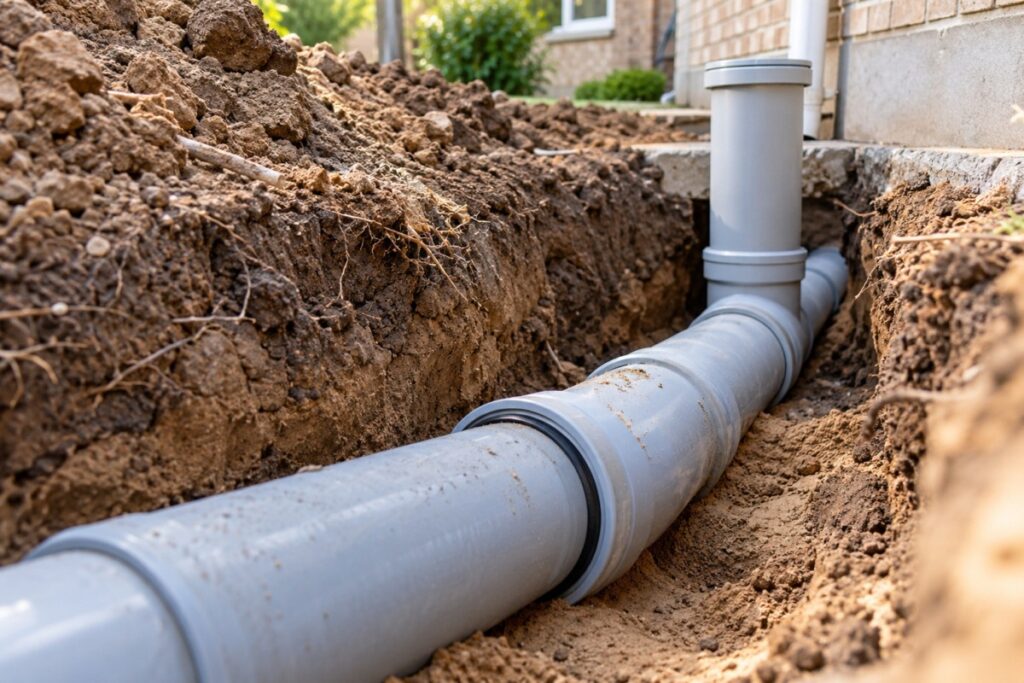
Professional sewer line installation involves evaluating the existing system, planning the pipe route, installing appropriate materials, and testing the completed connection.
The exact process depends on whether you’re replacing an existing sewer line or installing a new connection for a construction project.
A typical installation includes the following steps:
- Initial inspection: A plumbing professional evaluates the existing sewer system and identifies damaged sections or connection requirements.
- Installation planning: The plumber determines the appropriate pipe location, slope, materials, and installation method.
- Permits and utility coordination: Required permits are obtained, and underground utilities are located before excavation begins.
- Pipe installation: The damaged line is removed or bypassed as appropriate, and new sewer piping is installed according to applicable plumbing codes.
- Testing and inspection: The completed system is checked for proper connections, drainage, and compliance with applicable requirements.
- Site restoration: Excavated areas are backfilled and restored according to the agreed project scope.
Some properties may qualify for trenchless sewer replacement, which can reduce surface disruption. However, trenchless methods are not suitable for every situation, particularly when pipes have collapsed or require significant changes in alignment.
The City of Dallas Water Utilities Department provides guidance regarding wastewater service connections and applicable permitting requirements.
Working with an experienced plumbing contractor helps ensure your installation is properly planned and meets local requirements.
5. How Can You Prevent Future Sewer Line Problems?
Preventive maintenance can help extend the life of your sewer system and reduce the likelihood of unexpected repairs.
Even newly installed sewer lines benefit from responsible plumbing habits and periodic inspections when conditions warrant them.
Consider these practical maintenance tips:
- Avoid flushing wipes, paper towels, and other materials that do not break down easily.
- Keep cooking grease, fats, and oils out of kitchen drains.
- Address recurring clogs before they become complete blockages.
- Monitor trees and landscaping near underground sewer lines.
- Schedule professional drain cleaning when buildup or recurring blockages indicate a need.
- Arrange sewer camera inspections when persistent drainage problems suggest hidden damage.
The EPA identifies fats, oils, grease, and inappropriate materials entering sewer systems as contributing factors to sewer blockages.
Taking preventive steps can reduce unnecessary strain on your plumbing system.
For North Dallas property owners, maintaining healthy sewer lines is especially important because underground pipe damage may remain unnoticed until drainage problems become severe.
Frequently Asked Questions About Sewer Line Installation
How Do I Know If My Sewer Line Needs to Be Replaced?
Frequent sewage backups, multiple slow drains, persistent sewer odors, and recurring pipe failures can indicate that replacement may be necessary. A professional sewer camera inspection can confirm the condition of the pipe and help determine whether repair or replacement is appropriate.
Can a Sewer Line Be Installed Without Digging Up My Entire Yard?
Yes, some properties qualify for trenchless sewer installation or replacement, which can minimize excavation. Eligibility depends on the existing pipe’s condition, alignment, location, and the installation method required.
How Long Does Sewer Line Installation Take?
Many residential sewer line installations can be completed within one to several days once work begins. Larger projects, difficult excavation conditions, permitting requirements, or complicated utility connections may extend the timeline.
Who Is Responsible for Sewer Line Replacement in North Dallas?
Property owners are generally responsible for maintaining private sewer laterals, although responsibility can vary by municipality and the location of the damaged pipe. The City of Dallas has identified private sewer laterals as a homeowner responsibility, so property owners should verify the applicable requirements with their local utility provider.
Protect Your Property With Reliable Sewer Line Installation
A damaged sewer line can lead to recurring plumbing problems, unpleasant odors, wastewater backups, and costly property damage. Recognizing the warning signs and arranging a professional inspection can help you determine when a new sewer line is the right solution.
Whether you’re replacing deteriorating underground pipes or planning sewer installation for a new property, professional guidance helps ensure your plumbing system is designed for dependable performance.
At Mega Toilet Plumbing, we’re committed to helping North Dallas homeowners and property managers find practical solutions for their sewer and plumbing needs.
Ready for Professional Sewer Line Installation in North Dallas?
Don’t wait for recurring sewer problems to turn into a major plumbing emergency. Mega Toilet Plumbing is here to help you explore your options and take the next step toward a reliable sewer system.
Contact Mega Toilet Plumbing today to discuss your sewer line installation needs and request professional assistance.