Sewer Line Repair in North Dallas
How Do You Know If You Need Sewer Line Repair in North Dallas, TX?
The most common signs you need sewer line repair are multiple slow drains, recurring drain backups, sewage odors, soggy areas in the yard, or gurgling toilets. In North Dallas, shifting clay soil, tree root intrusion, and aging sewer pipes are the leading causes. A professional sewer camera inspection can identify the exact problem and determine whether the line can be repaired or needs replacement.
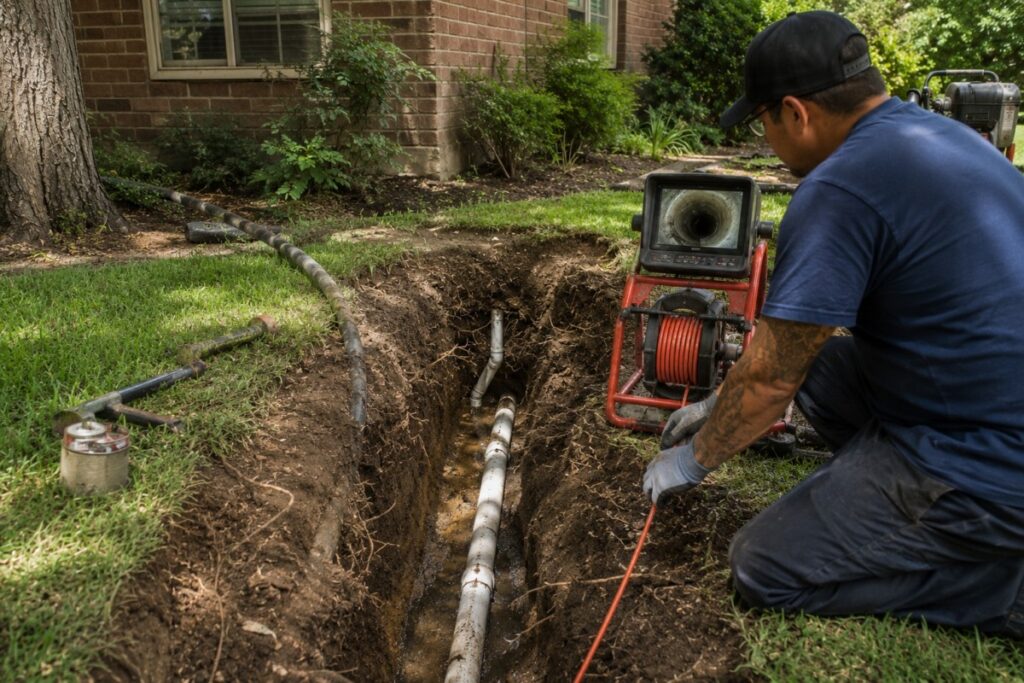
When sewer problems begin, acting quickly can prevent extensive property damage and costly emergency repairs. At Mega Toilet Plumbing, we help homeowners throughout North Dallas diagnose sewer issues accurately and recommend the most effective, long lasting solution. Our experienced plumbers use modern diagnostic equipment, including sewer camera inspections, to eliminate guesswork and provide honest recommendations based on the condition of your sewer line. Whether you’re dealing with an older home in Richardson, a growing neighborhood in Frisco, or an established community near Plano, we’re committed to delivering reliable service and exceptional customer care.
Common Sewer Line Problems in North Dallas Homes
What causes sewer line damage?
Several issues can damage a residential sewer line, but in North Dallas, a few problems appear more frequently than others.
The most common causes include:
- Tree root intrusion
- Shifting expansive clay soil
- Aging cast iron or clay sewer pipes
- Grease and debris buildup
- Cracked or collapsed pipe sections
- Poor installation or previous repairs
According to the U.S. Environmental Protection Agency (EPA), blockages, pipe breaks, and defects that allow groundwater infiltration are among the leading causes of sanitary sewer overflows in the United States.
North Texas is especially susceptible because expansive clay soils expand during wet weather and shrink during drought conditions. This constant movement places stress on underground plumbing and sewer lines.
Why are tree roots such a common sewer problem?
Tree roots naturally seek moisture. Even tiny cracks or loose pipe joints allow roots to enter the sewer line, where they continue growing until they restrict or completely block wastewater flow.
According to the National Association of Sewer Service Companies (NASSCO), root intrusion is one of the most destructive problems affecting sewer collection systems and a leading cause of sewer backups.
If root intrusion is caught early, hydro jetting and localized repairs may restore the pipe. Severe root damage may require trenchless lining or pipe replacement.
Can shifting soil damage sewer pipes?
Yes. North Dallas is known for highly expansive clay soils that move significantly with changing moisture levels.
This soil movement can:
- Separate pipe joints
- Crack older clay or cast iron pipes
- Create low spots where waste collects
- Allow groundwater infiltration
Homes throughout Plano, Carrollton, McKinney, Allen, and surrounding communities often experience these issues because many neighborhoods were built decades ago using materials that naturally deteriorate over time.
Sewer Line Repair Options for Damaged Pipes
Can a sewer line be repaired without digging up the yard?
In many cases, yes.
Modern trenchless repair methods allow plumbers to restore sewer lines with minimal excavation when the existing pipe is structurally suitable.
Common repair options include:
- Hydro jetting to remove grease, roots, and heavy buildup.
- Spot repairs for isolated damaged sections.
- Pipe lining (CIPP) to create a new pipe inside the existing pipe.
- Pipe bursting to replace severely damaged sewer lines with minimal digging.
According to NASSCO, cured-in-place pipe (CIPP) lining has been successfully used for decades to restore damaged sewer lines while minimizing excavation.
The right solution depends on the condition of your sewer line, which is why a camera inspection is always the first step.
What happens during a sewer camera inspection?
A sewer camera inspection provides a clear view of the inside of your sewer line.
During the inspection, your plumber can identify:
- Root intrusion
- Pipe cracks
- Bellied sections
- Grease buildup
- Offset joints
- Complete blockages
Because the inspection shows the exact location and severity of the damage, repairs can often be completed more efficiently while avoiding unnecessary excavation.
Signs You Should Schedule Sewer Line Repair Immediately
When should you call a plumber?
Certain symptoms indicate your sewer problem is becoming more serious.
Schedule an inspection if you notice:
- Multiple drains backing up simultaneously
- Toilets bubbling when sinks or tubs drain
- Sewage odors inside or outside your home
- Wet or unusually green patches in the yard
- Water pooling near the sewer line
- Frequent drain clogs that keep returning
Waiting too long can allow wastewater to back up into your home, potentially creating health hazards and expensive cleanup costs.
How to Help Prevent Future Sewer Line Problems
Can homeowners reduce the risk of sewer damage?
Yes. While some issues like aging pipes cannot be prevented, regular maintenance significantly lowers the risk of unexpected failures.
Helpful prevention tips include:
- Schedule periodic sewer camera inspections for older homes.
- Avoid flushing wipes, paper towels, and hygiene products.
- Never pour grease down kitchen drains.
- Address slow drains before they become complete blockages.
- Consider hydro jetting if your home has recurring root problems.
- Plant new trees away from underground sewer lines.
Preventive maintenance often extends the life of your plumbing system while reducing emergency repair costs.
Frequently Asked Questions
How long does sewer line repair usually take?
Many repairs can be completed within one day. Larger replacements or complex repairs may require additional time depending on the extent of the damage.
Does every sewer problem require replacing the entire pipe?
No. Many sewer issues only require localized repairs, root removal, or trenchless lining. A camera inspection determines the most appropriate solution.
Is sewer line repair covered by homeowners insurance?
Coverage varies by policy. Sudden accidental damage may be covered, while normal wear and tear or gradual deterioration often is not. Review your policy or speak with your insurance provider.
How often should a sewer line be inspected?
Homes with mature trees, older plumbing systems, or recurring drain issues benefit from a professional sewer inspection every few years, even if no major symptoms are present.
Ready for Professional Sewer Line Repair in North Dallas?
If you’re experiencing slow drains, recurring backups, or signs of a damaged sewer line, don’t wait for the problem to worsen. Mega Toilet Plumbing provides professional sewer line inspections and repair services throughout North Dallas, using advanced equipment to identify problems quickly and recommend the most effective solution. Contact us today to schedule your sewer line inspection and restore your plumbing with confidence.